Lord SriKrishna
Specialties:
The Supreme Teacher (Jagadguru): Krishna delivered the Bhagavad Gita to Arjuna on the battlefield of Kurukshetra, providing timeless spiritual and practical guidance to humanity.
Symbol of Divine Love: His relationship with the Gopis and Radha in Vrindavan represents the highest form of devotion and the union between the individual soul and the Divine.
Master Strategist: In the Mahabharata, he guided the Pandavas to victory not through weapons, but through unmatched wisdom, strategy, and the protection of Dharma.
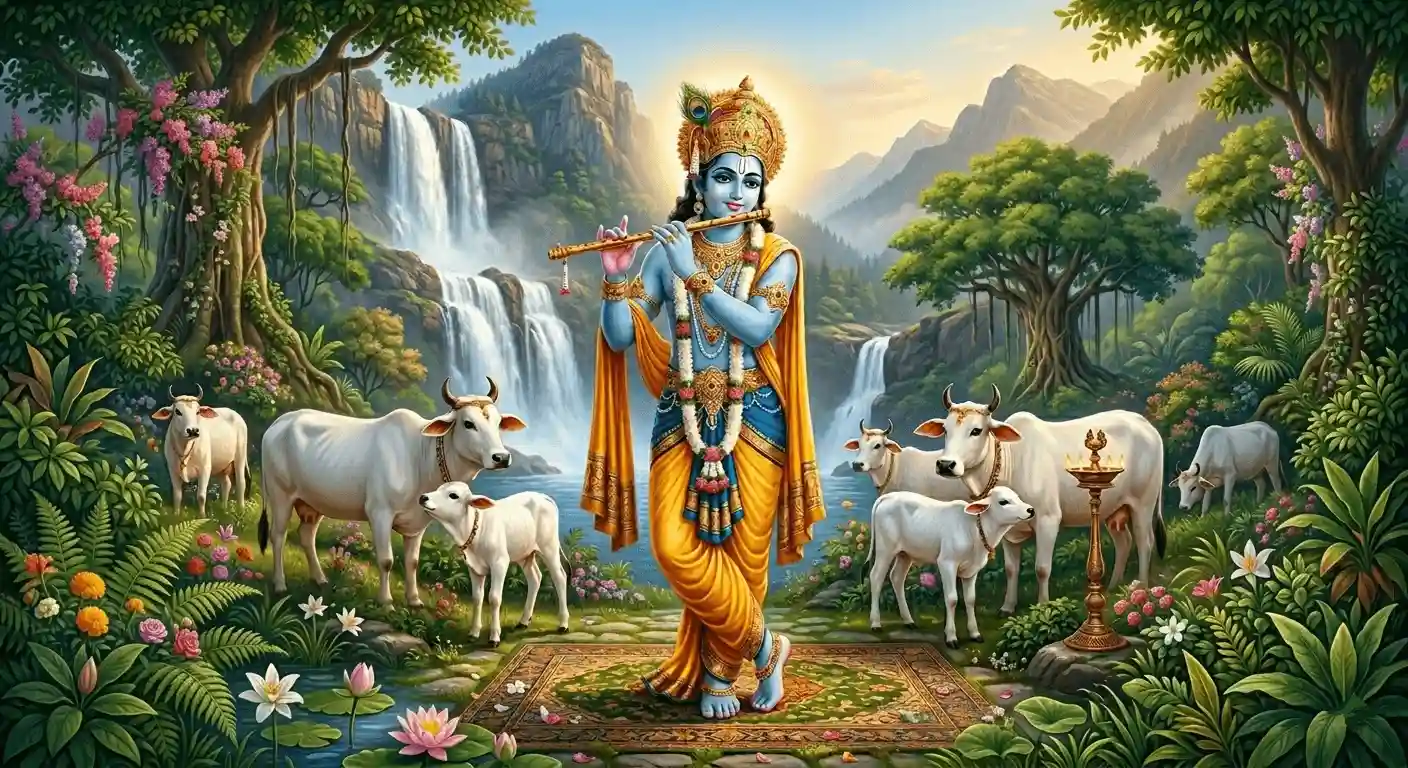
Multifaceted Persona: He is uniquely revered in various forms—as a mischievous child (Bala Krishna), a divine cowherd, a master musician with his flute, and a powerful king.
Famous Temples: Dwarkadhish Temple (Dwarka, Gujarat), Banke Bihari Temple (Vrindavan, Uttar Pradesh), Guruvayur Temple (Guruvayur, Kerala), Jagannath Temple (Puri, Odisha), Shri Nathji Temple (Nathdwara, Rajasthan).
Biological Parents: Father = Vasudeva, Mother = Devaki.
Foster Parents: Father = Nanda, Mother = Yashoda.
Divine Consort: Radha Devi, Rukmini, Satyabhama, Jambavati. Lord Krishna's divine consorts represent different aspects of devotion and spiritual union. In the traditions of Sanatana Dharma, these relationships are seen as the connection between the individual soul and the Supreme Divine.
Children: Sons: Pradyumna, Bhanu, Samba. The most prominent are the sons of the Ashtabharya, some texts mention that he had a total of 80 sons from his primary queens.
Siblings: Balarama, Subhadra.
Abode: Goloka Vrindavana
Aliases: Gopala, Vasudeva, Janardana, Mukunda, Parthasarathi, Keshava, Shyamasundara. Lord Krishna is known by thousands of names (Sahasranama), each reflecting a different attribute, divine play, or quality.
Vehicle: Chariot (Ratham)
Weapon: Sudarshana Chakra, Kaumodaki Gada, Panchajanya Shankha, Nandaka Sword, Sharanga Bow
Festivals of Krishna: Krishna Janmashtami, Govardhan Puja, Holi
Birth Secret:
Destroy Evil: Krishna was born to eliminate powerful, demonic forces, most notably his uncle King Kansa, who had usurped the throne and oppressed the innocent.
To Deliver the Bhagavad Gita: His birth paved the way for the Kurukshetra War, where he delivered the Gita—a timeless manual for human life and spiritual evolution.
To Grant Devotees' Wishes: His presence allowed devotees to experience a personal, loving relationship with the Divine through his childhood leelas and adult guidance.
Death: The passing of Lord Krishna, known as Niryana, marks the end of the Dvapara Yuga and the beginning of the Kali Yuga. According to the Mahabharata and the Bhagavata Purana, his departure was a pre-ordained divine event.
The Final Act: A grieving Krishna retired to the forest to meditate. A hunter named Jara mistook Krishna’s moving foot for a deer’s ear and shot a poisoned arrow made from a fragment of the same iron bolt.
Ascension: Realizing the mistake, Jara begged for forgiveness. Krishna consoled him, explaining it was all part of the divine plan, and then ascended to his eternal abode, Goloka, in his four-armed Vishnu form.
Biography:
Birth: Born at midnight in a prison cell in Mathura to Devaki and Vasudeva.
Childhood (Gokul & Vrindavan): Raised by foster parents Nanda and Yashoda. This period is filled with divine plays (Leelas), such as lifting Govardhan Hill and dancing with the Gopis.
Establishment of Dwarka: After killing the tyrant Kansa, Krishna moved to the western coast of India and established the "Golden City" of Dwarka.
The Kurukshetra War:He served as the charioteer (Parthasarathi) for Arjuna and delivered the Bhagavad Gita, the ultimate discourse on life and Dharma.